
Saturday 17 Oct 2026
Auction 2026 Goes Live

Wild Salmon Crisis
The wild Atlantic salmon population in Great Britain is now endangered.
RESEARCH
We know that wild Atlantic salmon face a complex range of pressures across their lifecycle – in our rivers, around our coasts and at sea. The challenge with these ‘known pressures’ is understanding and quantifying their impact. By building the evidence base we can direct restoration and advocacy efforts for greater effect.
While we work to quantify the impact of these known pressures, it’s vital that we also work to fill knowledge gaps about what is causing wild salmon populations to decline. Significant knowledge gaps remain in particular about what happens to wild salmon in coastal waters and in the open ocean.
Central to our research work is the Likely Suspects Framework – a data modelling project delivered on behalf of the Missing Salmon Alliance. This is a sophisticated salmon population modelling tool which draws information from our own research and that of others.
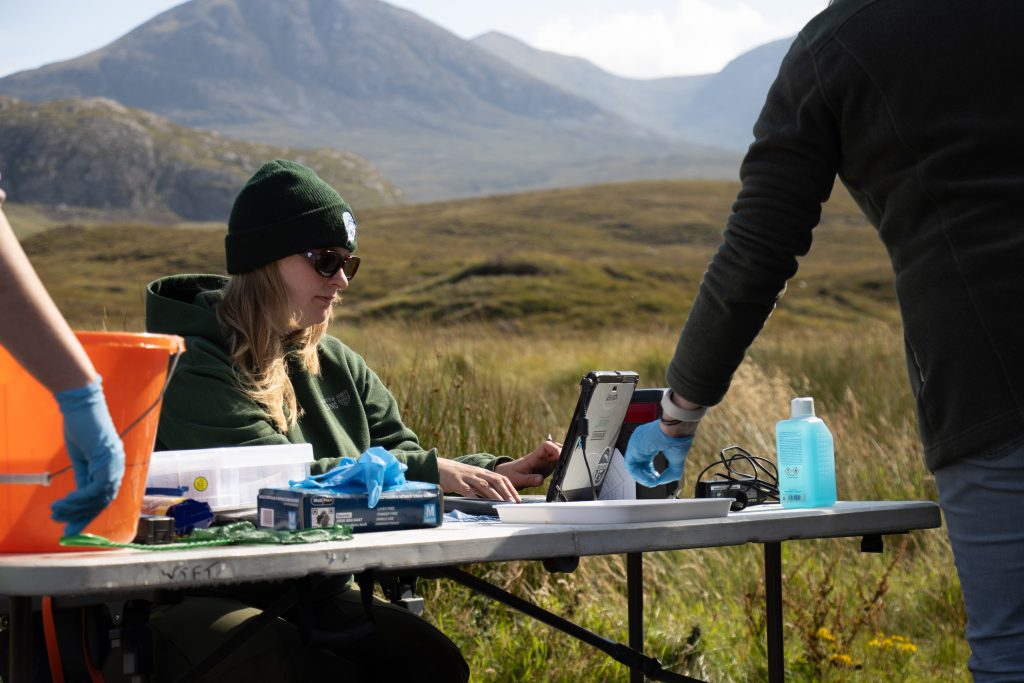
GATHERING EVIDENCE TO SUPPORT RECOVERY
Two of our most significant research projects in recent years were the Moray Firth Tracking Project and West Coast Tracking Project. Together these represent the largest wild salmon acoustic tracking projects ever to take place in Europe.
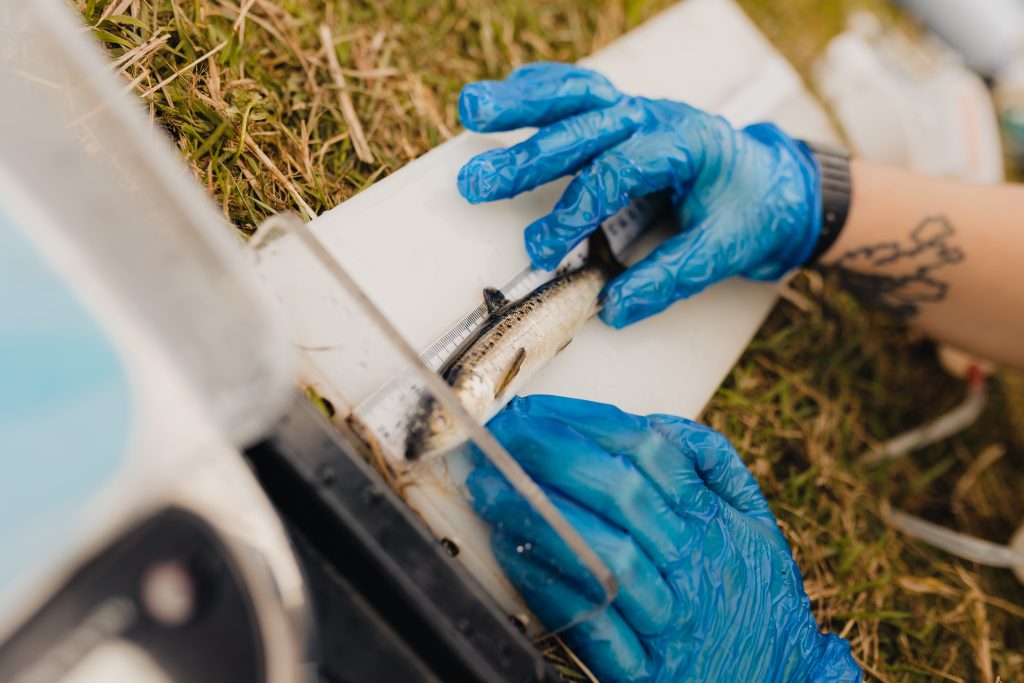
The Moray Firth Tracking Project was a three-year project which began in 2019 with data collection completing in 2024.
Across three study years 1,960 wild salmon smolts were tagged with acoustic tags from the rivers; Deveron, Spey, Findhorn, Ness, Conon, Oykel and Shin. Tagged fish could be recorded when they came into range of acoustic receiver units in rivers, estuaries and at sea. The project saw 761 receiver deployments across its three study years.
The overall aim of the project was to investigate the early phase of the migration of juvenile salmon, as they journey downstream and out to sea for the first time. Specifically, investigating where smolts go missing in freshwater and their movement pathways in the Moray Firth – a region where 20% of the UK’s wild salmon populations are located.
A remarkable amount of information was successfully obtained and continues to be analysed in detail. The thorough analysis of data is a labour-intensive process but an important one, ensuring that the outputs from this project have impact and can support practical management solutions to protect wild Atlantic salmon. The project was supported by Fishery and Rivers Boards and Trusts and their volunteer networks.
To read the project’s published research papers, visit our Knowledge Hub.
MORAY FIRTH TRACKING PROJECT
The Moray Firth Tracking Project revealed groundbreaking insights about smolt migration behaviour in rivers and into the marine environment. Its findings are actively supporting efforts to improve in-river smolt survival and protect nearshore areas from marine development.
The West Coast Tracking Project was a three year study which took place from 2021-2023 aiming to advance our understanding of the marine and near-coastal migratory distribution of wild Atlantic salmon around the West Coast of Scotland.
Learning more about the migratory pathways of wild salmon smolts was designed to generate evidence to contribute to stronger regulatory processes governing pressures in the marine environment.
Across its three study years the project tagged 3,349 wild salmon smolts with acoustic tags and deployed 862 acoustic receiver units in rivers, estuaries, sea lochs and at sea. A remotely operated submersible detected tagged fish 300km offshore. Smolts were tagged on 15 West Coast and Hebridean rivers: Nith, Bladnoch, Clyde, Endrick, Etive, Loy, Lundy, Awe, Laxford, Laxay, Fyne, Snizort, Eriboll, Aray and Grimersta.
This project was a partnership between the Atlantic Salmon Trust, Fisheries Management Scotland and the Marine Directorate with collaboration and research expertise from the University of Glasgow. It was also supported by Fishery and Rivers Boards and Trusts and their volunteer networks.
To read the project’s published research papers, visit our Knowledge Hub.
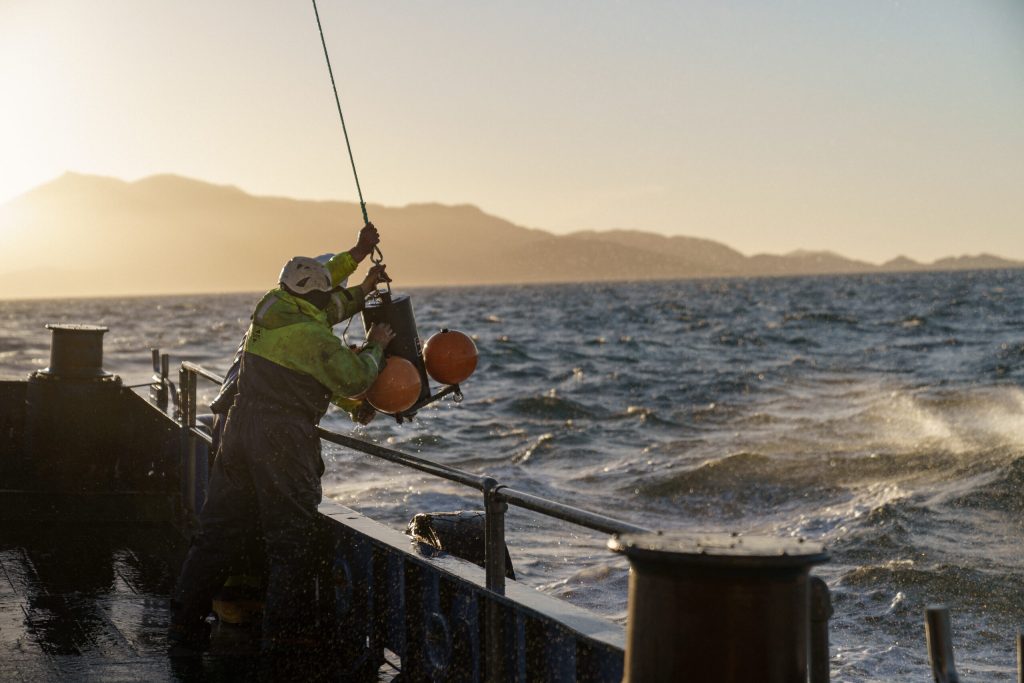
WEST COAST TRACKING PROJECT
The West Coast Tracking Project added significant new knowledge to our understanding of where wild salmon smolts go once they leave the rivers of the West Coast of Scotland.
The ongoing publication of this research in peer-reviewed scientific journals is directly contributing to management, regulation and conservation efforts in the region.
LATEST
 News
Saturday 17 Oct 2026
Auction 2026 Goes Live
 News
Tuesday 6 Oct 2026
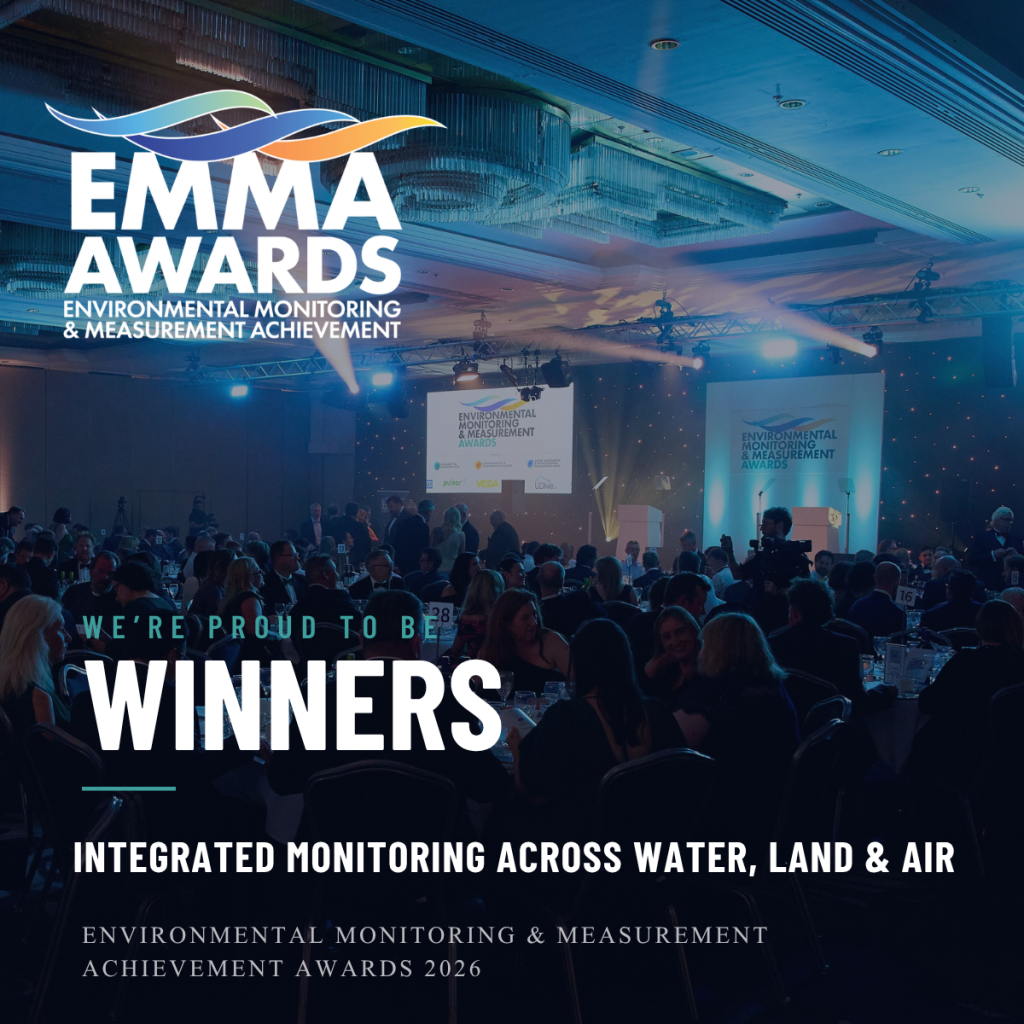
Project Deveron wins 2026 EMMA Award
 News
Thursday 1 Oct 2026
Project White Hart interactive website launched
 Project Update
Monday 10 Aug 2026
Major Update – Save the Spring, River Dee
 Project Update
Thursday 6 Aug 2026
Core Rivers 2025 Adult Salmon Sonar Counts Announced
 Project Update
Tuesday 21 Jul 2026
Project Deveron Nominated for Prestigious 2026 EMMA Award