Posted on 10th Aug 2026
A Major Milestone Reached
Completing one of Scotland’s largest-ever catchment audits, with over 1,200km² now mapped
This month marks a defining milestone for Save the Spring – a partnership between the River Dee Trust, Dee District Salmon Fishery Board and Atlantic Salmon Trust. The partnership has now completed its detailed catchment audit for the entire Upper River Dee watershed—an area spanning over 1,200km² upstream of Aboyne. This is one of the largest and most detailed catchment mapping exercises ever undertaken for a river system in Scotland, linked to wild Atlantic salmon recovery as a focus species within a wider audit for river recovery. This important work has been funded by the Cairngorms National Park Authority.
Ever since the Save the Spring partnership was launched in 2023, we have been clear that restoring environmental resilience in the Upper Dee catchment would be central to the programme. Completing the catchment audit marks the first major step in turning that vision into a coordinated, long-term, evidence-led restoration strategy. While this represents the end of one phase of the project, it is, more importantly, the beginning of a new chapter. We have now assembled a comprehensive picture of the catchment, bringing together decades of existing knowledge, new field surveys, cutting-edge technology and habitat assessments into a single evidence base that will guide restoration at the scale the River Dee and its wild salmon now require, particularly its spring-run salmon.
The aim was never simply to collect more data. It was to consolidate existing knowledge, fill the most important evidence gaps, and create the foundation for practical restoration at a landscape scale.
The catchment audit gives us a single, comprehensive evidence base that will guide restoration work at the scale required for nature and people.
The Goal – Resilience
Building on an existing conservation legacy and scaling up for impact
As the effects of the twin crises of climate change and biodiversity loss intensify, catchments throughout the country are facing the same problems: floods, droughts, rising temperatures and a loss of resilience.
The River Dee has long been recognised as one of Scotland’s leading examples of river restoration. It is a designated Scottish Biodiversity Strategy Exemplar Catchment and Public Sector Reform Pioneer Catchment, with the lessons learned intended to support wider nature recovery across Scotland. In line with this, over recent years, the River Dee Trust and Dee District Salmon Fishery Board, as well as local land managers and other partnerships, have delivered a wide range of restoration projects – including riparian woodland restoration, peatland and wetland work, and barrier removal. The Cairngorms National Park Authority’s Cairngorms 2030 project is delivering an ambitious programme of work that will see the Cairngorms become the UK’s first net-zero National Park.
This level of work reflects that, in order to adapt to today’s challenges, nature, communities and threatened species now require restoration to be planned across the whole landscape and watershed, rather than at individual sites. The challenge is no longer simply identifying good projects; it is ensuring they work together as part of a coordinated restoration strategy. Developing and delivering this strategy is Save the Spring’s mission.
The catchment audit provides us with the high-quality, decision-grade data required to outline the actions we can take to increase water storage, improve water quality and restore whole ecosystems.
Wild Salmon as the Measure of Catchment Resilience
Endangered wild Atlantic salmon are at the heart of Save the Spring because they are one of the clearest indicators of the health and resilience of the entire river system.
For salmon to thrive, rivers need functioning floodplains, healthy tributaries, connected habitats, clean gravels, cold, clean water and natural river processes. In providing these conditions for wild salmon, we improve conditions for countless other species while strengthening the resilience of the catchment itself.
From Knowledge to Action
What goes into a catchment audit?
The catchment audit method has been developed through the Atlantic Salmon Trust’s Core Rivers and Watershed Connections programmes.
The process is not about starting from scratch or repeating work that has already been done. It is about bringing together a remarkable breadth of existing information alongside targeted new surveys to create a single, integrated understanding of the catchment.
This shared evidence base will allow restoration priorities to be identified with confidence and at the strategic scale, ensuring future work is targeted where it can deliver the greatest benefit in terms of catchment resilience.
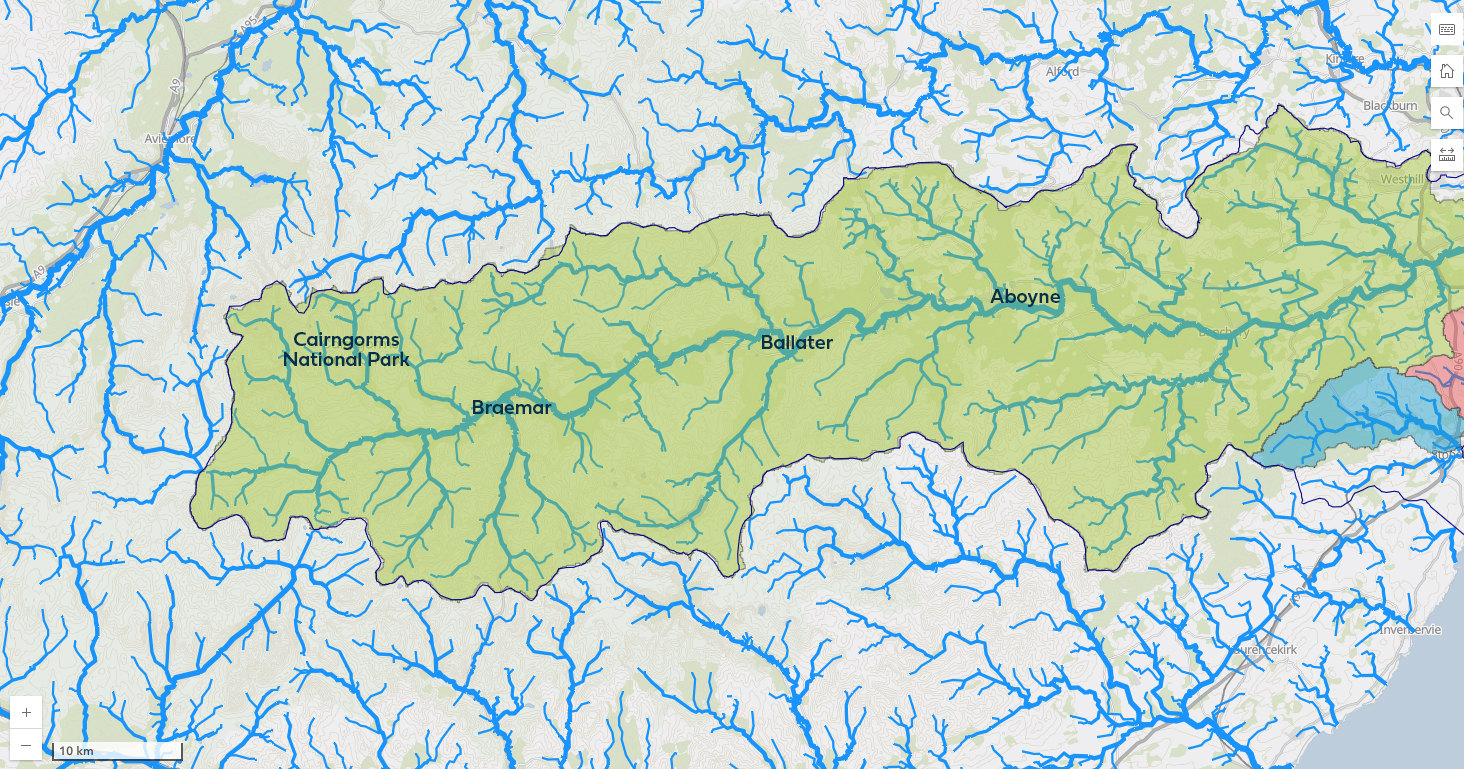
The catchment audit has pulled together ecological, hydrological and geomorphological information spanning the entire 1,200km² Upper River Dee watershed.
New Technology, Better Understanding
Using advanced drone, LiDAR and satellite surveys, the team has developed a detailed Geographical Information System—or GIS—model of the entire 1,200km² Upper River Dee catchment. This includes the landscape surrounding the main river, as well as key tributaries including the Clunie, Ey, Feadar, Gairn, Geldie, Gelder and Muick.
This platform now gives us an incredible one-metre-resolution view and assessment of riparian-zone health, woodland cover, soil health, vegetation types, flow characteristics, peatland condition, water storage and hundreds of other datasets.
Combined with field observations and historical data, this new tool provides us with the information required to begin to truly develop a comprehensive restoration and resilience plan for the entire river system.
The Scale of Insight
Snapshots of our new strategic view
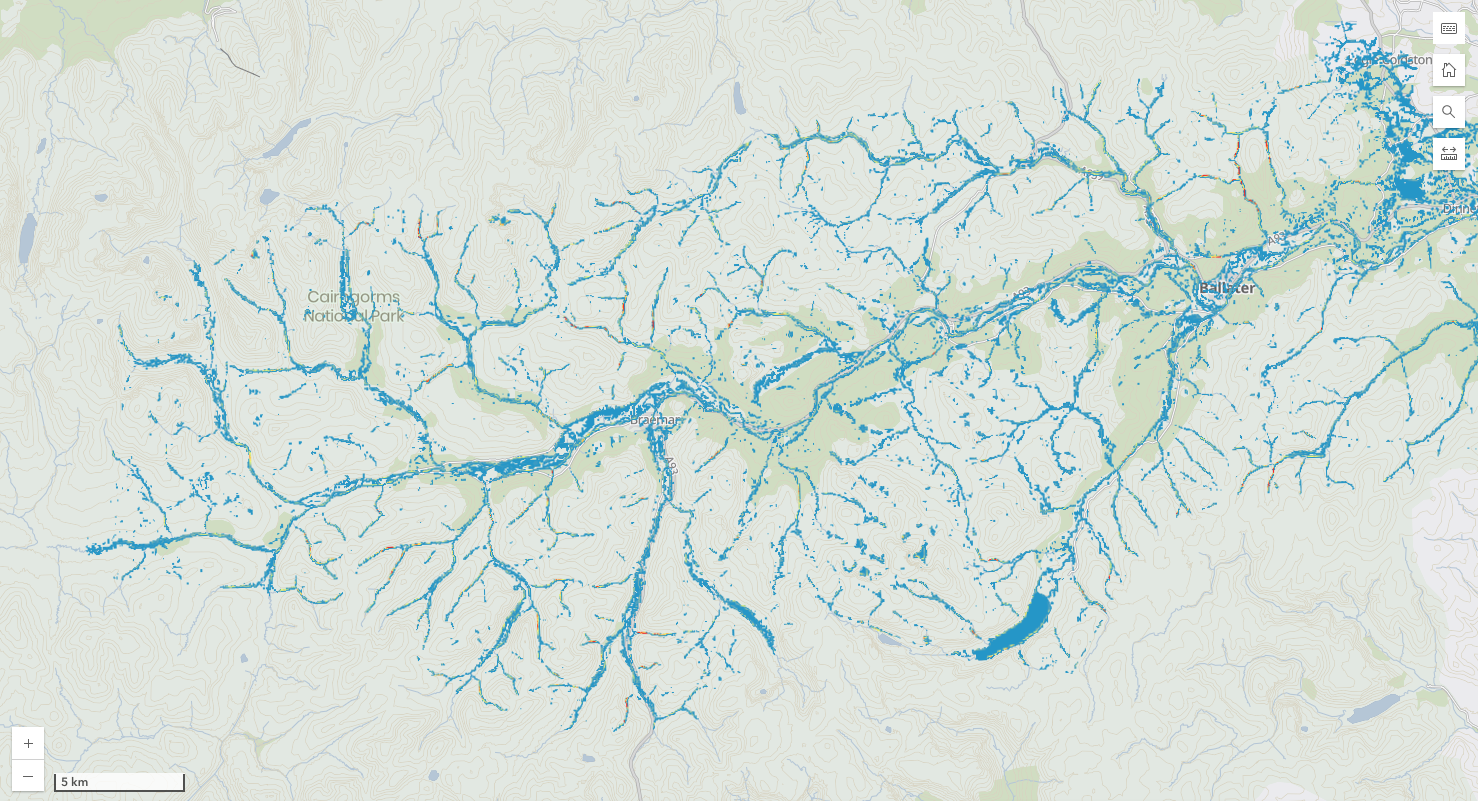
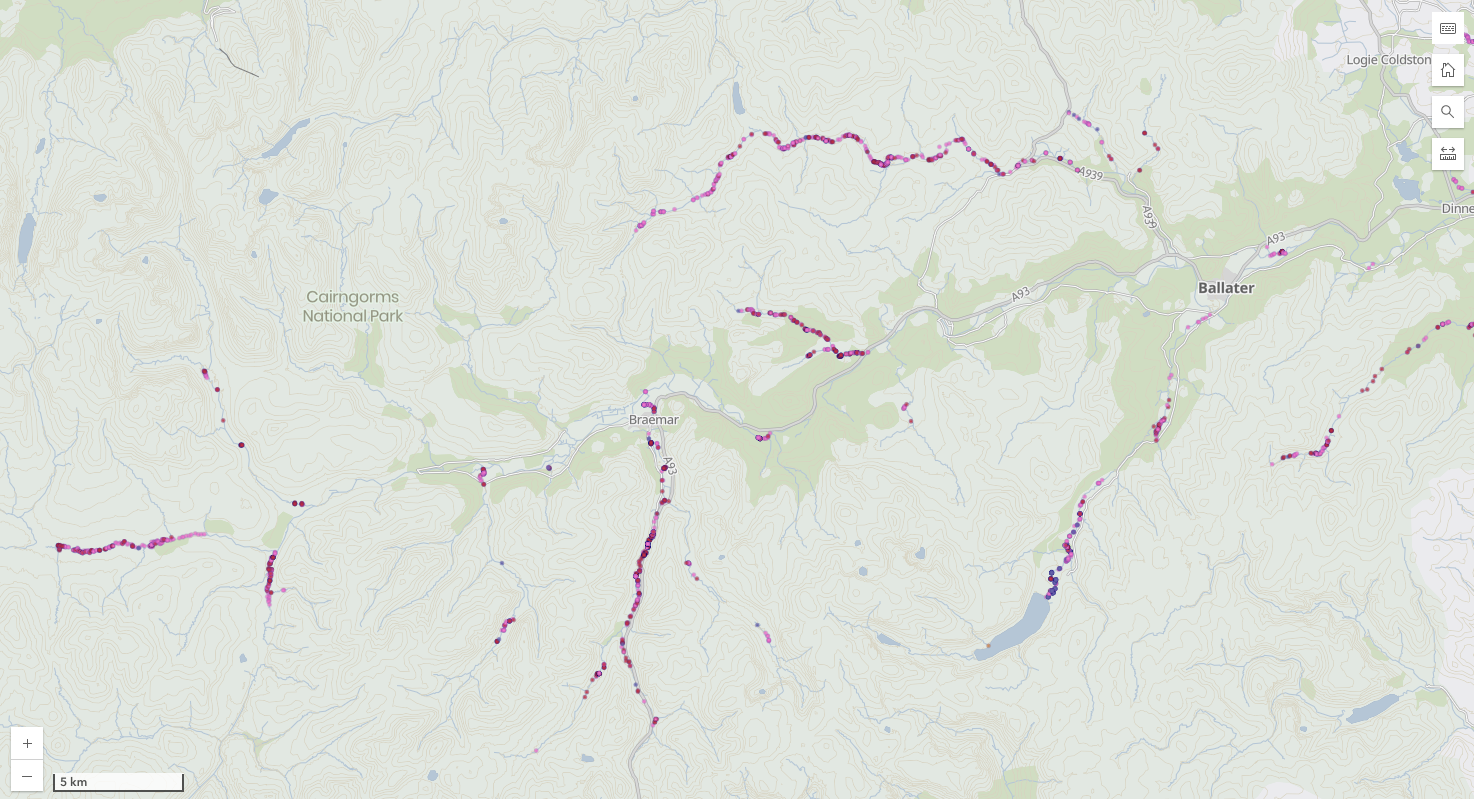
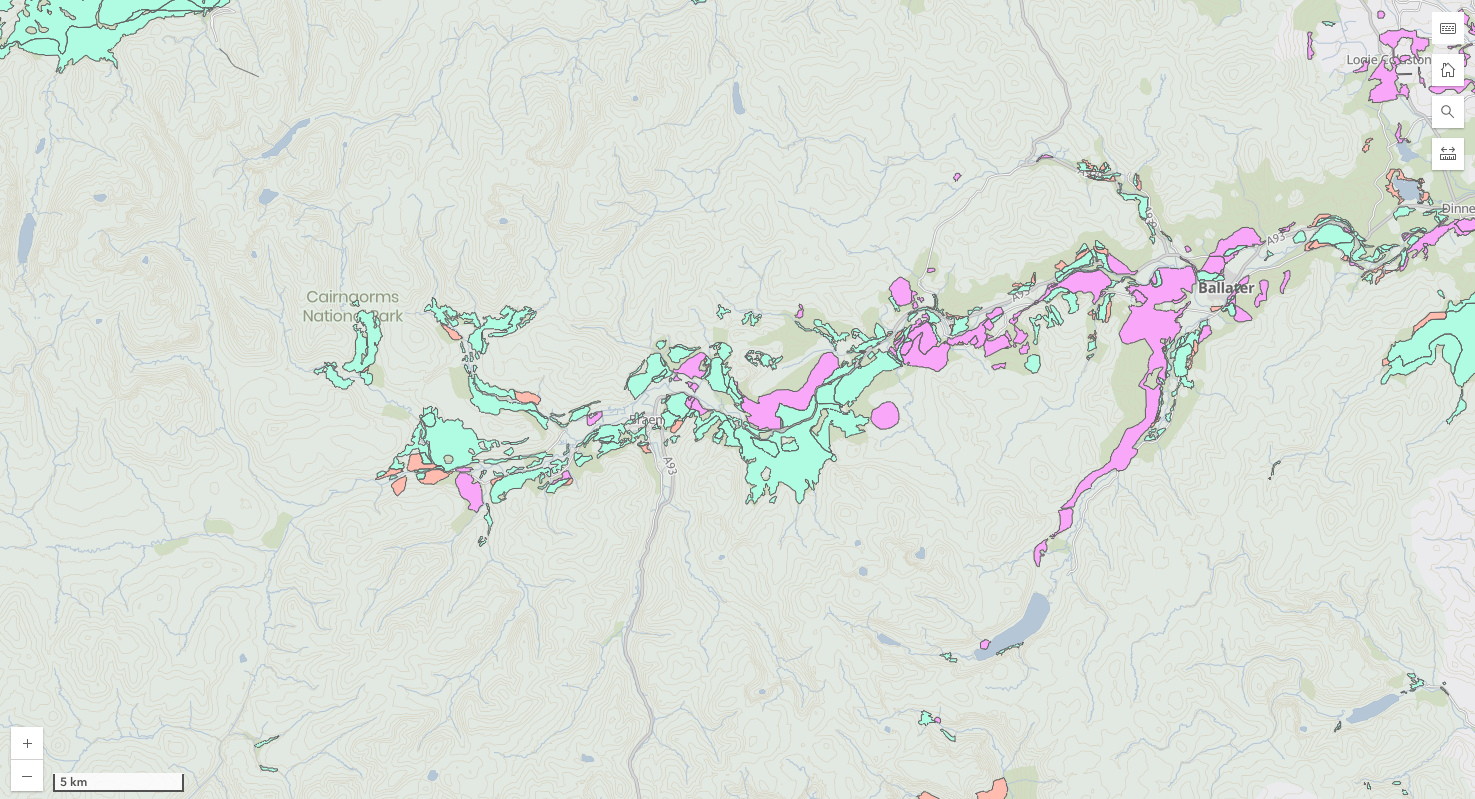
Our GIS platform enables hundreds of information layers to be toggled on or off, aiding the identification of opportunities to improve catchment resilience. Below are a few examples illustrating the level of insight now available to us.
Rainfall Analysis
A layer showing rainfall accumulation will help guide work to steady the flow of water off the landscape, helping to reduce the impacts of floods and droughts.
Salmon Redds
A layer showing salmon redd survey sites can be overlaid to help us identify locations where restoration work can support wild spawning through bank stabilisation and gravel augmentation.
Habitat Types
Layers show us the presence of different tree species, soil types and many other variables to help identify place-specific restoration opportunities.
Looking Ahead
Restoration which supports people – as well as nature
Completing the audit is not the finish line. It provides the platform for the next and perhaps most important stage of the Save the Spring programme.
Over the coming weeks and months, the team will analyse and interpret the findings before working collaboratively with landowners, businesses, estates, local communities, policymakers and environmental organisations to develop practical restoration plans at scale.
It is vital that plans are developed in collaboration with these stakeholder groups if we are to realise the long-term goal of secure wild salmon populations within a resilient watershed.
Challenges and Natural Capital Opportunities
While early interpretation of the audit is highlighting the significant challenges facing wild salmon, it is also highlighting huge opportunities – both in terms of restoration work and natural capital.
Alongside the planning of physical works, the partnership will explore how restoration can be supported through sustainable funding models that create long-term benefits for people as well as nature, supporting local jobs, developing new skills and strengthening rural communities.
The partnership is committed to sharing what we learn and fostering a broad, collaborative approach. We hope to create a working example of catchment adaptation to support wider habitat-resilience improvements across Scotland and the UK.
A Collaborative Effort
Our thanks to those who helped us reach this milestone
The Save the Spring partnership would like to extend our special thanks to the Cairngorms National Park Authority for funding this important piece of work.
The next key stage is to engage with all local stakeholders to ensure that restoration plans are drawn up collaboratively, helping to realise the full potential and opportunities of nature recovery in Deeside.
We look forward to providing further updates in the future.