
Posted on 6th Aug 2026
Core Rivers programme publishes third year of returning adult salmon sonar counter data.
How it works
The short video below demonstrates the type of video footage which Adaptive Resolution Imaging Sonar (ARIS) sonar counters are able to record. On the left hand side of the screen the footage was filmed with a conventional underwater camera, and the footage on the right hand side is recorded by an ARIS counter. This clip from the Laxford shows a group of adult salmon passing the ARIS camera, identifying the number of individual fish and allowing an estimation of their sizes. In both Project Laxford and Project Deveron, this equipment has been funded by the Scottish Government’s Marine Directorate and is operated by our local project teams, with the recorded data then modelled by the Marine Directorate.
2025 Counts
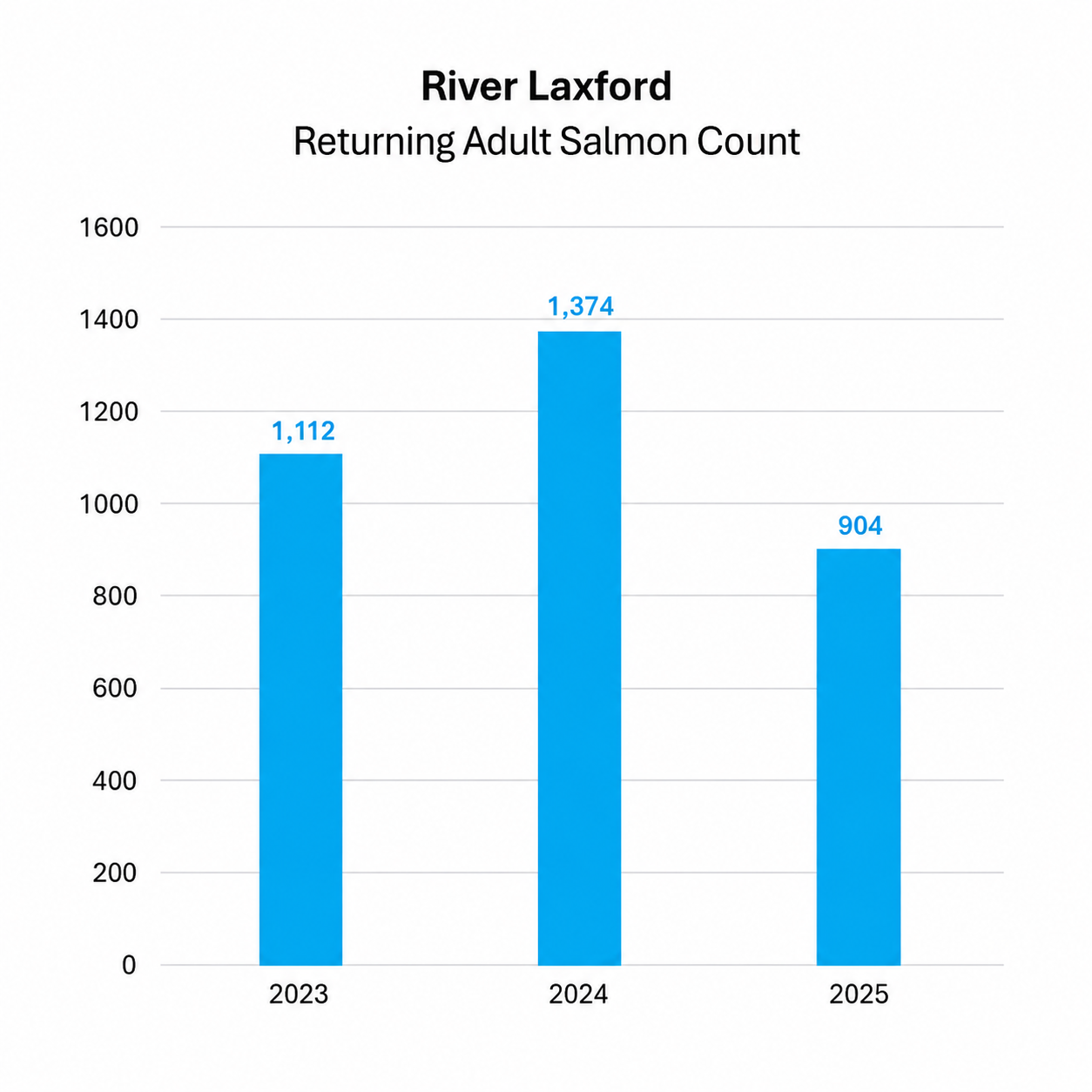
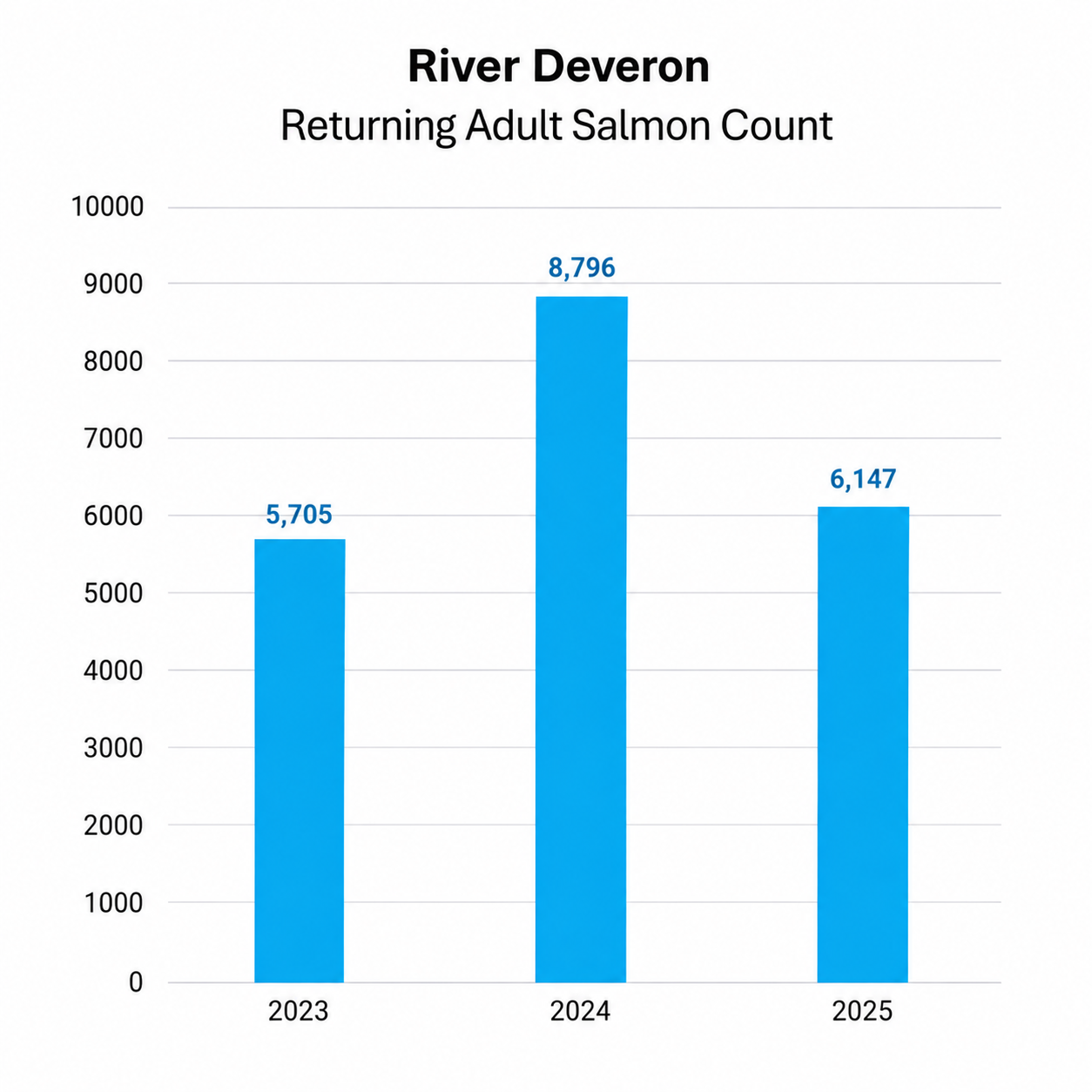
Project Deveron, delivered in partnership by the Deveron, Bogie & Isla Rivers Charitable Trust, and Project Laxford in partnership with Grosvenor’s Reay Forest Estate, have completed their third annual sonar count for the River Deveron and River Laxford.
In 2025, 904 returning adult Atlantic salmon were recorded on the Laxford, and 6,147 on the Deveron.
Why ARIS counts matter
The 2025 count adds another important piece to the long-term picture. Individual years will always vary, but that’s exactly why consistent monitoring matters. The rod catch rate across these years on the Deveron for example, fluctuated due to weather conditions and fishing effort, from 19% in 2024 to 6% in 2025. Again, this highlights the importance of looking beyond fishery records to gain a true understanding of how many adult salmon are returning.
Core Rivers are helping build one of the country’s most accurate long-term datasets on wild Atlantic salmon, providing the evidence needed to understand how populations are changing and whether habitat restoration is delivering measurable improvements over time. Combined with sonar imaging, both rivers employ parr PIT tagging programmes to understand migration behaviour, juvenile habitat use and marine survival rates. They also monitor water temperatures, invertebrate populations and changes to wider biodiversity.
Despite exceptionally low river levels in 2025, these sonar systems successfully captured the data needed to complete the counts, which will also contribute to the Scottish Government’s wider assessment of the health of wild salmon populations across the country.
This year we also continued integrating AI-assisted analysis into our counting workflow. The technology is already reducing the time required to process thousands of hours of sonar footage, making long-term monitoring more efficient and scalable. We’re also improving AI models to better distinguish salmon from trout and developing new tools to identify smolt shoals and eels.
In collaboration with the Scottish Fisheries Coordination Centre and Fisheries Management Scotland, we developed the ARIS SONAR Fish Monitoring System, supported by the Marine Fund Scotland. The project is an extension to the Scottish Salmon Counter Network, part of a package of measures to support salmon conservation using funding announced by the Cabinet Secretary in October 2021.
Every year of monitoring strengthens our understanding of wild salmon populations, helping us measure long-term trends and critically the impact of habitat restoration over time.