The Wild Salmon Lifecycle
Wild Salmon Crisis
The wild Atlantic salmon population in Great Britain is now endangered.
A new life begins
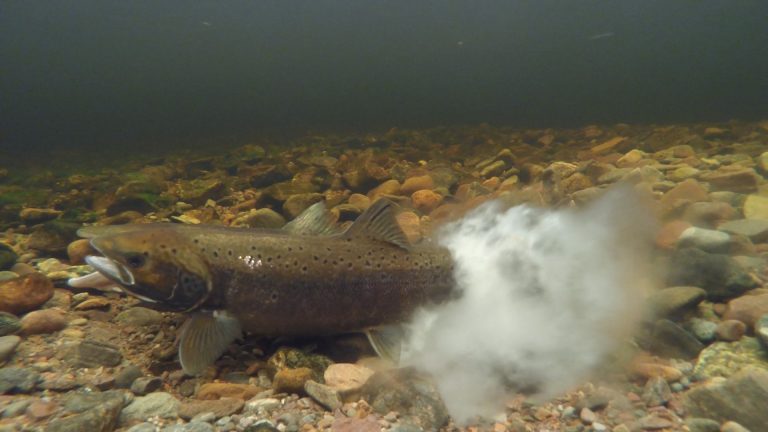
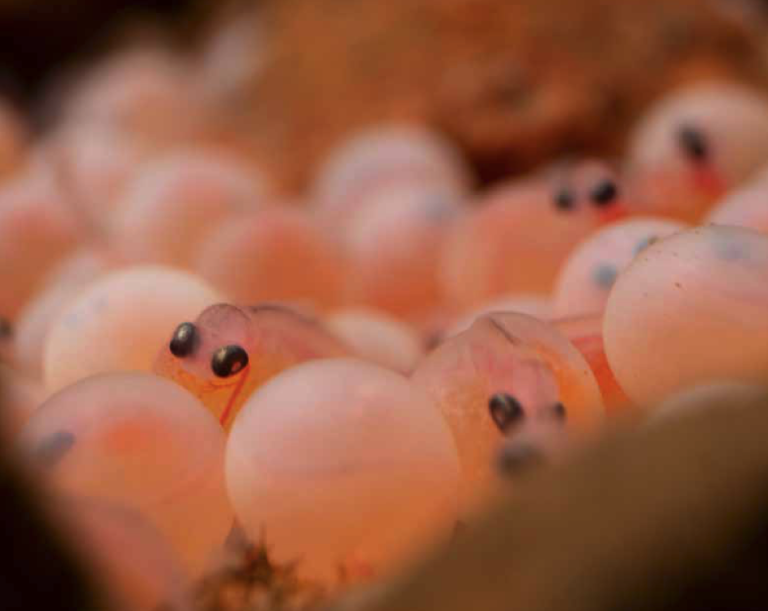
Wild Atlantic start their lives as tiny eggs, laid in sheltered gravel nests or ‘redds’ by their parents. Adult female salmon excavate redds with their tails and, after spawning, use their tails to cover them up again. Spawning occurs in late autumn/early winter.
Eggs are highly vulnerable to being washed out of rivers during powerful winter floods. This is why catchment restoration is so important, with wetlands, healthy peatland and riverside woodland helping to slow the flow of water off our landscapes.
Salmon eggs also need to remain in water temperatures between 5-8°C to hatch successfully and are therefore increasingly at risk from climate change.
A salmon emerges
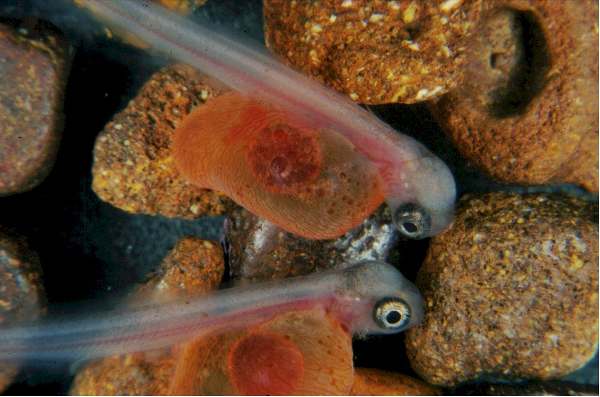
The alevin is the first stage of a wild Atlantic salmon’s life after it hatches from the egg. It remains hidden within the gravel of the riverbed, where it is protected from predators and strong currents.
At this stage, the tiny salmon carries a distinctive yolk sac attached to its underside, which provides all the nutrition it needs while it continues to develop. Alevins generally remain within the gravel for several weeks, gradually absorbing the yolk sac and becoming stronger.
Alevins are especially vulnerable to siltation, poor water quality and disturbance of spawning gravels, which can reduce oxygen flow and threaten their survival before they even emerge.
Once the yolk has been used up, the young salmon emerges from the gravel as a fry, ready to begin feeding for itself.
Becoming free swimming
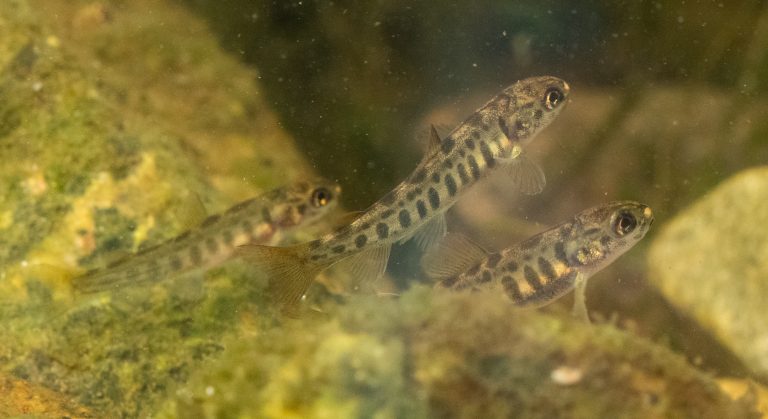
The fry stage begins when young salmon emerge from the riverbed gravel, having absorbed their yolk sac. For the first time, they must begin feeding for themselves, typically on tiny aquatic invertebrates.
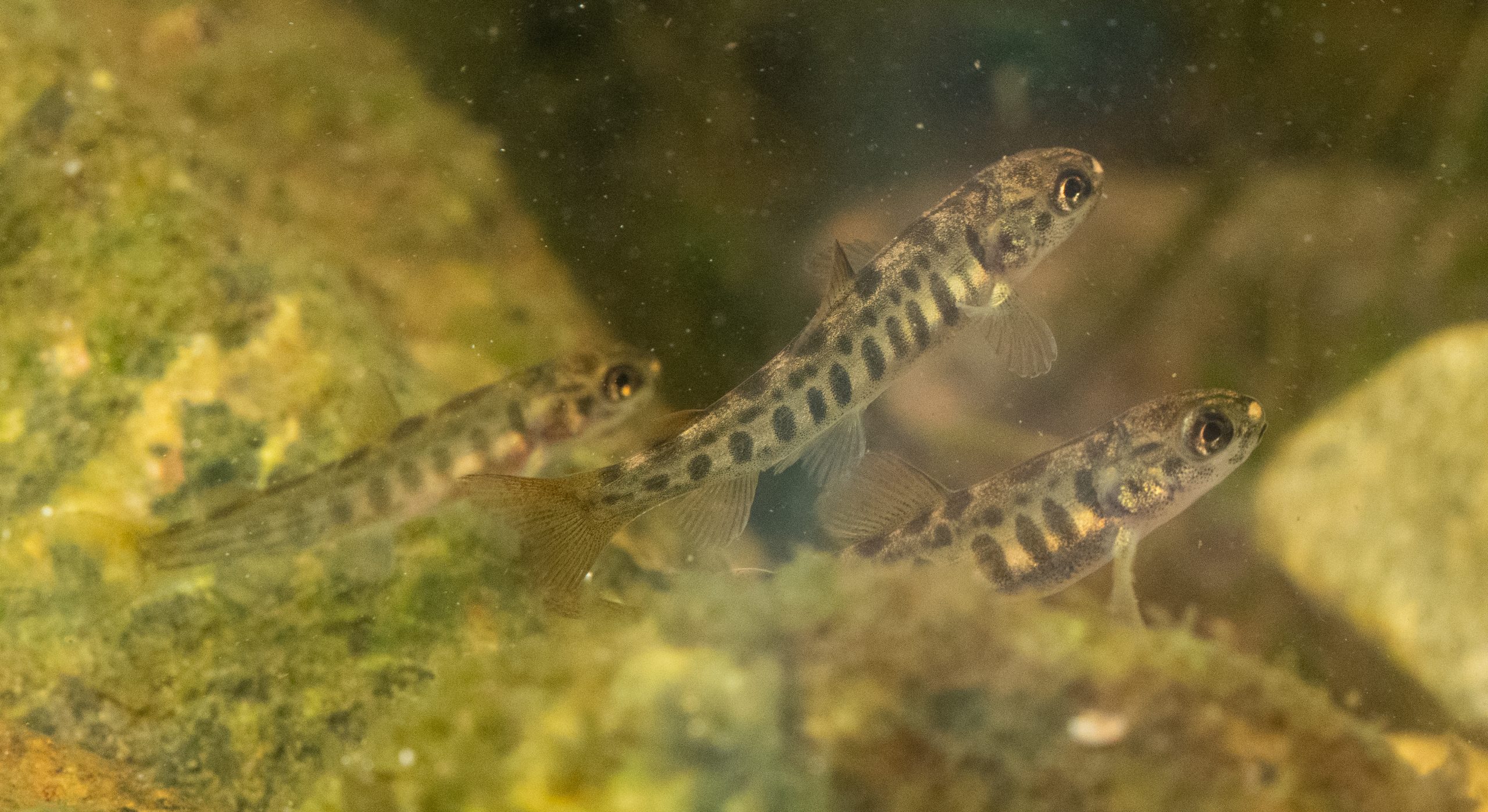
Fry remain in freshwater, seeking areas that offer shelter from strong currents and predators. As they feed and grow, distinctive dark markings begin to develop along their sides.
Fry are particularly vulnerable to high water temperatures, low flows, poor water quality and loss of suitable habitat, making healthy, resilient rivers critical to their survival.
Preparation for life ahead
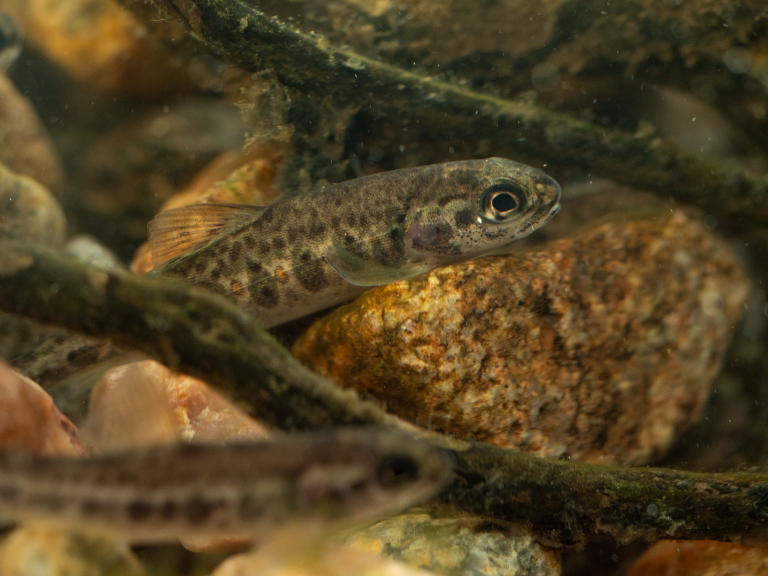
The parr stage is when young salmon spend their time growing and developing in freshwater, typically remaining in their home river for one to two years, but occasionally longer. They are recognisable by the distinctive dark vertical ‘parr marks’ along their sides, which provide camouflage.
Parr feed mainly on aquatic insects and other small invertebrates, competing for suitable habitat and shelter within the river. As they grow, they prepare for one of the most dramatic upcoming changes in their lifecycle.
Parr are particularly vulnerable to rising water temperatures, which can cause physiological stress and reduce growth and survival, making cool, shaded and resilient river habitats increasingly important. Their growth slows once water temperatures exceed 16°C and stops altogether above 18-20°C.
The journey begins
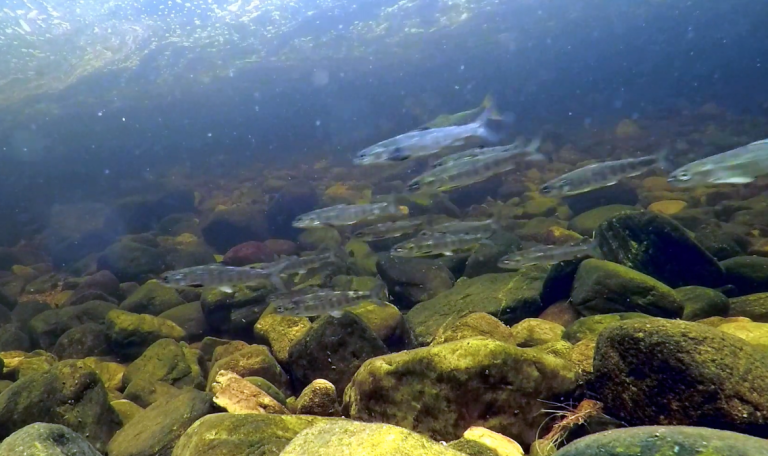
The smolt stage marks a major transformation in a young salmon’s life. As it prepares to leave freshwater, its body undergoes major physiological changes that allow it to survive in saltwater, while its appearance changes from the dark markings of a parr to a more silvery colour.
Guided downstream towards estuaries, smolts begin one of the most extraordinary journeys in nature, leaving their home river behind and migrating out to sea.
Smolts are particularly vulnerable during their downstream migration, when barriers, altered river flows, predation and poor water quality can all reduce their chances of successfully reaching the sea.
A vast migration
The post-smolt stage begins once young salmon enter the sea. Having adapted to saltwater, they leave our coastal waters and begin their long migration into the North Atlantic, following ocean currents towards rich feeding grounds.
This is a period of rapid growth, but also a critical transition. Post-smolts must find sufficient food and navigate a vast and changing marine environment before eventually returning as adults.
Some will migrate hundreds or even thousands of miles into the North Atlantic Ocean to feed and grow, with British and Irish salmon travelling as far as Greenland before returning home. Fewer than 3% will survive to return to their home rivers, down from as high as 25% in the 1960s – a reflection of the profound changes happening in our oceans. Conservationists are also increasingly concerned that post-smolts may be being caught as unintended bycatch in pelagic marine fisheries.
Preparing for the journey home
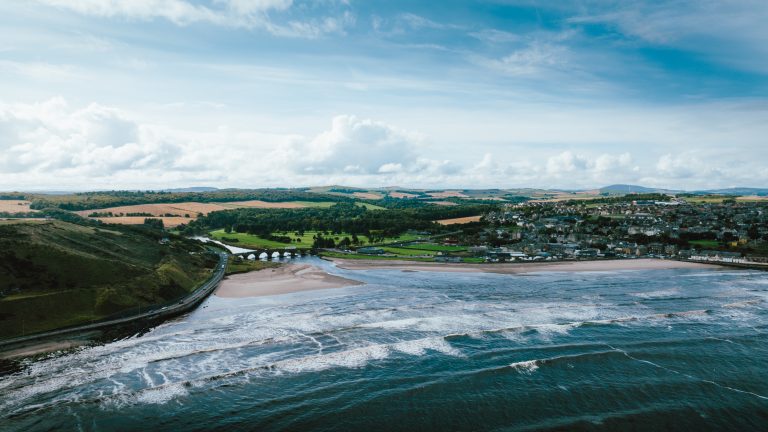
Once at their North Atlantic feeding grounds, salmon spend one or more years feeding and growing rapidly, taking advantage of food-rich ocean waters to build the strength and energy reserves needed for their remarkable journey home.
Using an extraordinary homing instinct, they navigate back across the ocean and return to the river, often even the same stretch of water, where their lives began.
Salmon which return home after one winter at sea are known as ‘grilse’, while those that spend two or more winters at sea are known as ‘multi-sea winter salmon’.
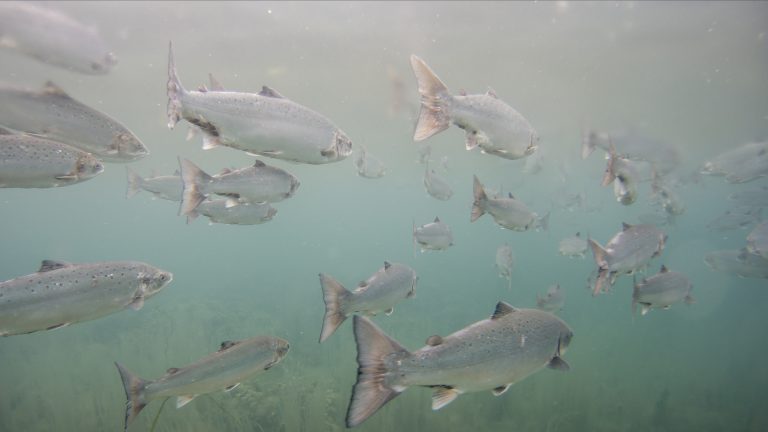
A 'bar of silver' fresh from the sea
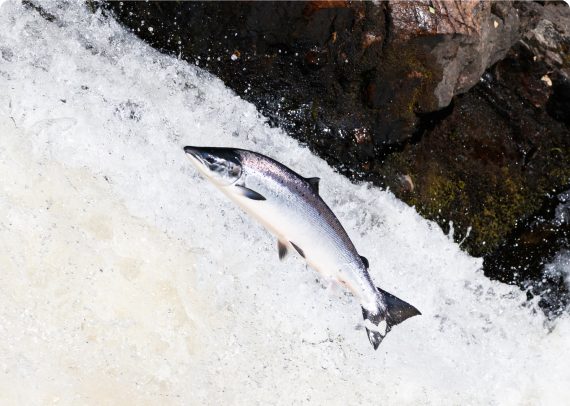
Returning bright and silver from the ocean, adult salmon begin the final stage of their extraordinary migration home. Driven by instinct, they push upstream against powerful currents, leaping waterfalls and navigating rapids and obstacles as they make their way towards their spawning grounds.
In the UK and Ireland, adult salmon return to our rivers in every month of the year, but the vast majority return during the summer months of June-August. Historically, there were substantial spring and autumn runs of salmon on many rivers, but these have declined markedly in recent years.
Returning adults are vulnerable to high water temperatures, low river flows and barriers to migration, which can delay or prevent them from reaching their spawning grounds and leave them with less energy to reproduce successfully. They can also be a target for illegal fishing.
The lifecycle completes
After some time in freshwater, adult salmon lose their silver sheen and take on a mottled, darker brown appearance – both for camouflage and for mate attraction. Males will develop an enlarged hooked lower jaw or ‘kype’, and their scales will transform into vivid ‘tartan coats’ – with striking red and orange hues.
Once they reach their spawning grounds, adult salmon begin the final act of their remarkable journey. The female selects an area of clean, well-oxygenated gravel, using powerful movements of her tail to excavate a nest known as a ‘redd’. Here she releases her eggs, which are fertilised by a male before she covers them with gravel, protecting them from the current and predators.
A female may create several redds and lay thousands of eggs, investing the energy accumulated during her years at sea into the next generation. With the eggs safely beneath the riverbed, the cycle begins again – the next generation of wild salmon developing in the same river system their parents fought so hard to reach.