Data Modelling
Wild Salmon Crisis
The wild Atlantic salmon population in Great Britain is now endangered.
The Likely Suspects Framework
Delivered on behalf of the Missing Salmon Alliance
Wild Atlantic salmon are iconic, keystone species but across the North Atlantic their populations have declined by over 70% in the last 50 years.
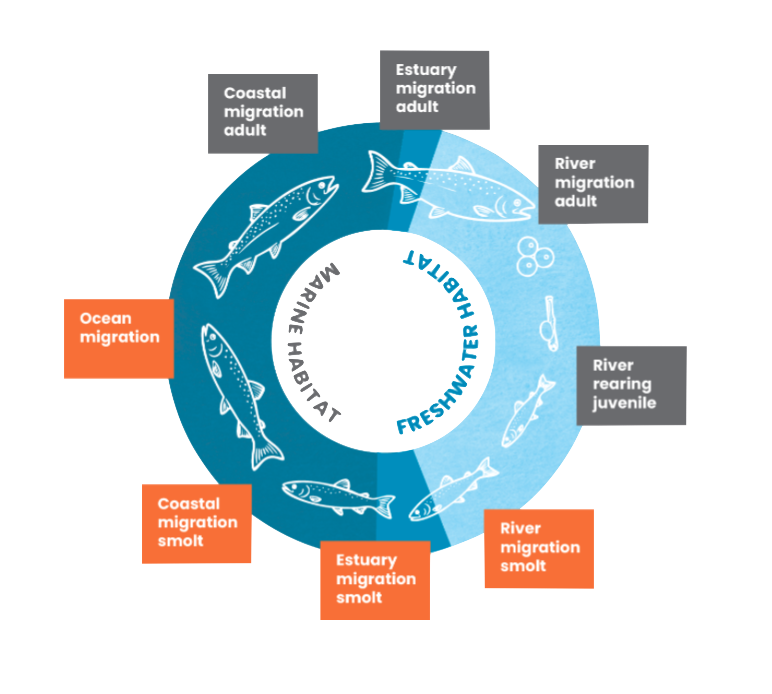
The reasons for this decline are varied from region to region, and across different stages of their complex lifecycle and migration as they travel from freshwater, through coastal zones, into the open Atlantic Ocean, and then back again to their natal rivers and streams to spawn. Over recent decades, the number of adult salmon which survive that complex migration has fallen lower and lower, driven both by factors affecting juveniles in freshwater, and through a significant decline in their marine survival and return rate. The salmon’s lifecycle itself has not changed – so other factors are at play meaning that wild Atlantic salmon are no longer thriving in the way they should.
The Likely Suspects Framework is an ambitious data and science project seeking to understand why wild salmon populations are declining, by identifying the key pressures influencing their decline at each life stage and across their whole lifecycle.
It models complex data gathered through research projects and against baseline salmon population data series from long-term monitored ‘index’ rivers, collating this against information on the pressures known to be a factor in each salmon life stage.

Developing a digital salmon manager’s restoration support tool
Turning science into action
The team working on the Likely Suspects Framework is currently transforming this knowledge into a practical salmon management digital support tool, whereby managers can model their salmon population’s future trajectory and restoration potential by helping them to identify which life stages can be targeted for improvement, and what the outcome of this may look like.
LIKELY SUSPECTS FRAMEWORK
Associated Research
The Likely Suspects Framework team is publishing new research papers alongside the development of its new salmon population modelling too.
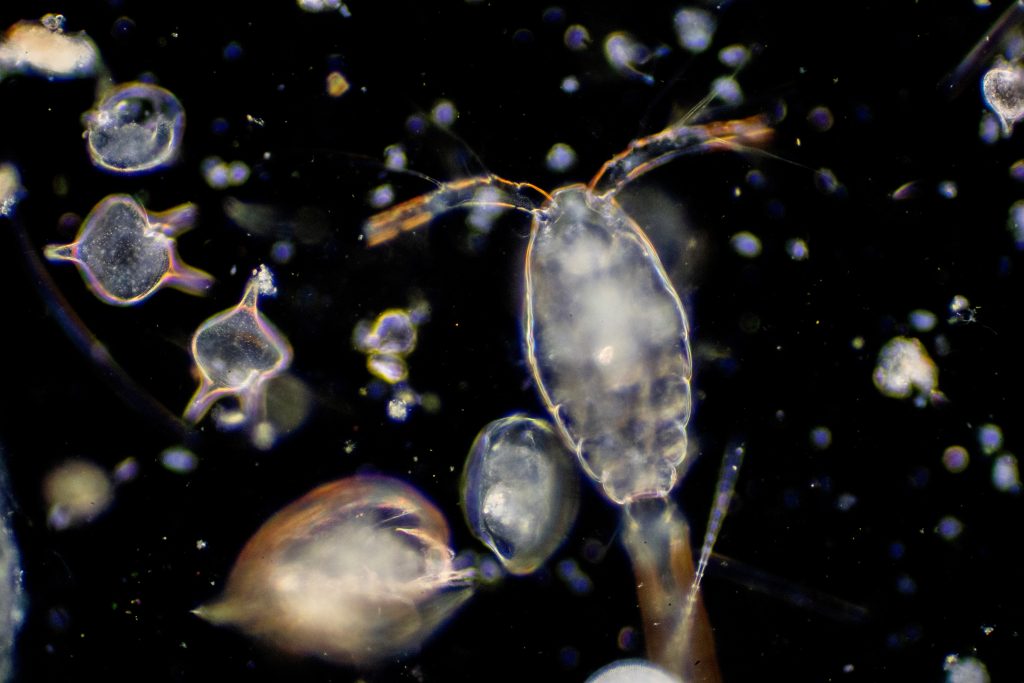
A significant piece of research has linked the drop in wild salmon marine survival to declining zooplankton energy through the juvenile salmon food chain. Zooplankton is essential prey for the larvae of fish such as sandeel and blue whiting which young salmon ‘post-smolts’ (fish which have entered the marine environment) rely on for feeding during their marine life phase.
The study found that ‘zooplankton prey energy has significantly and dramatically declined over much of the northeast Atlantic, and specifically within key salmon migration domains, over the past 60 years.’
To read about this research in full, and its implications, click the button below or visit our Knowledge Hub.